
What were the key design features that made the P-47 so survivable in combat despite its complexity?
There are a few features/design choices that made the P-47 so rugged and survivable despite its complexity. It was often known as “the Jug” due to its potbelly shape, but the British thought “jug” was short for “juggernaut” due to its overwhelming toughness.
The plane was powered by a Pratt & Whitney R-2800 radial engine. Radial engines can sustain more hits than liquid-cooled engines like the ones found in the Spitfire. Liquid-cooled engines relied on vulnerable coolant systems, and once those systems were hit, the plane would start leaking coolant and losing power. The P-47’s engine was also shielded by thick, heavy cowling.
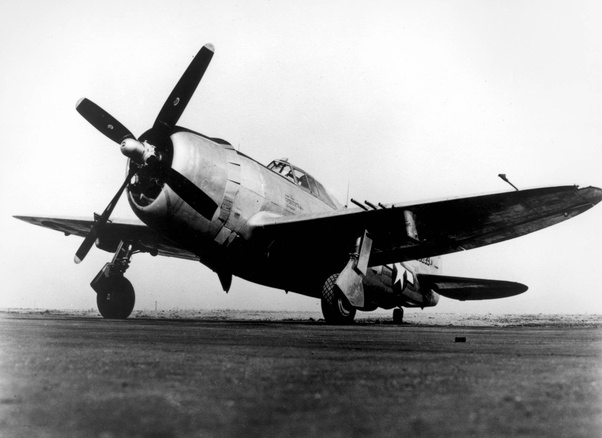
The P-47 was also big, heavy, and strong. It had a sturdy airframe and a high weight, meaning it could muscle through more hits than other planes. Since the control surfaces were so large, it mattered less when parts of the wing or tail were hit and pilots retained more control.
The cockpit was also protected with heavy armor plating and a bullet-resistant windshield, shielding pilots from enemy fire.
It was essentially a flying tank.
 Flight Online
Leave a comment