
Learn about aerodynamics
What are aerodynamics?
Aerodynamics is the study of how objects interact with various fluids as they move. It’s used in a variety of fields, including aerospace, automotive engineering, and a number of sports.
CFD and its role
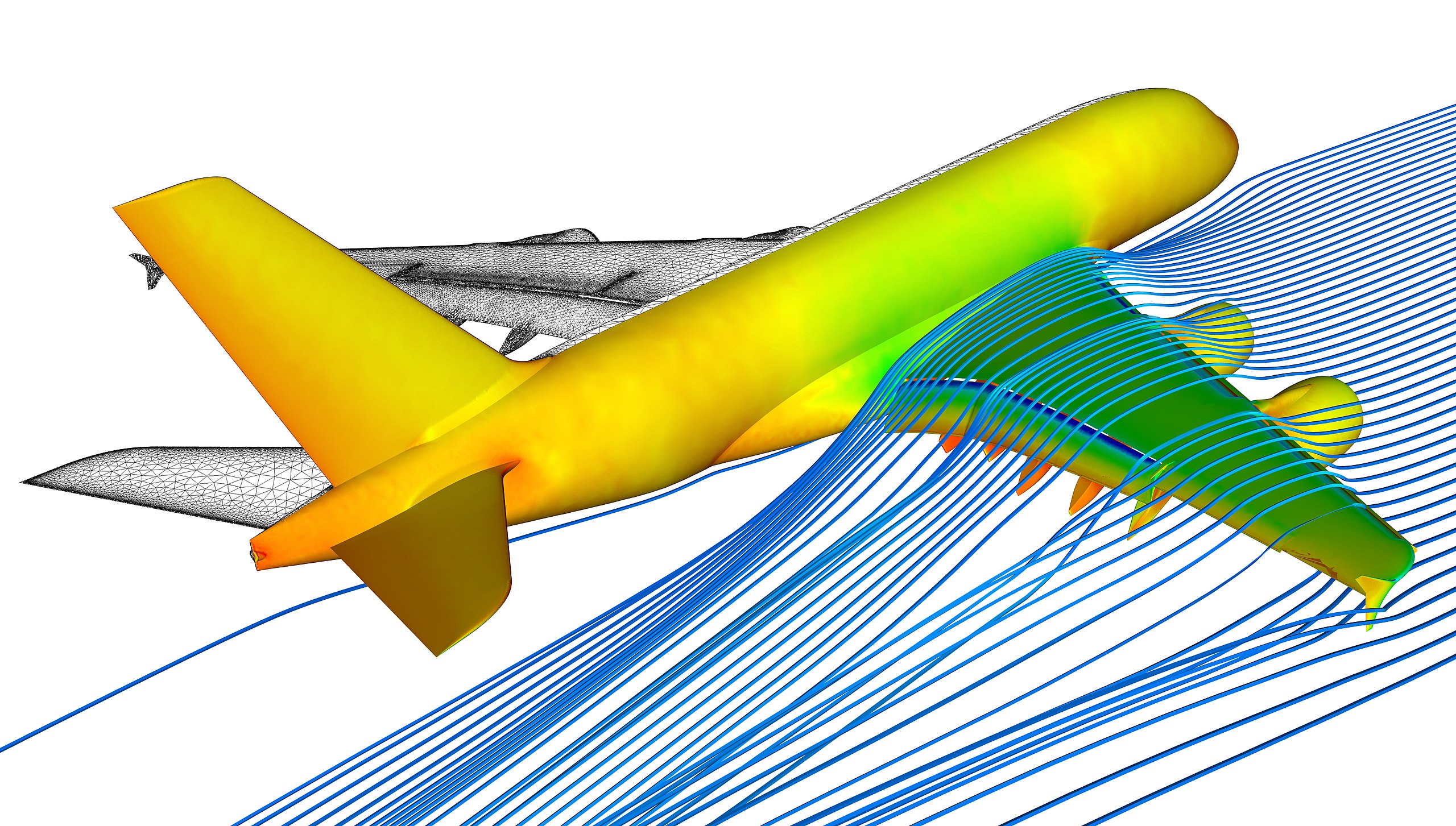
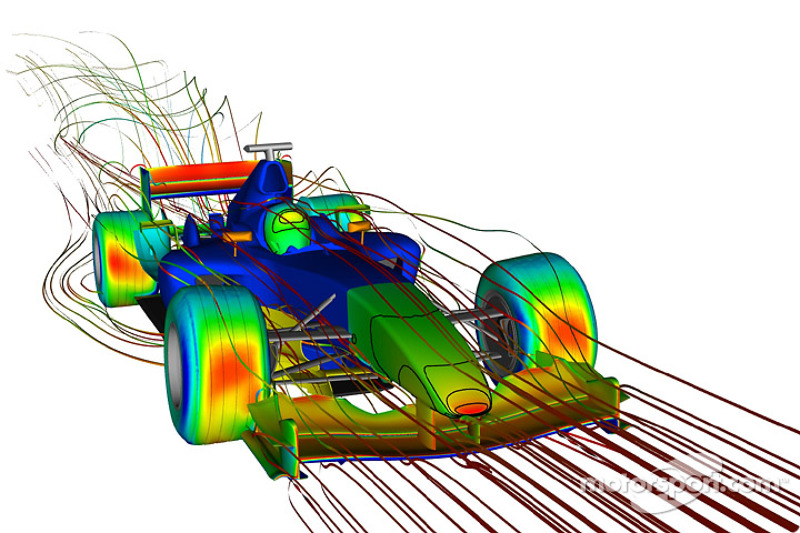
The image above is a computational fluid dynamics (CFD) computer simulation of an Airbus A380. The purpose of a CFD is to analyze and predict how fluids will flow around the body of any given object – in this case, it’s the flow of air around the A380. Below is another example of CFD, this time of an F-1 race car; F-1 teams often hire aerospace engineers to design their cars.
Internal vs. external aerodynamics
In aerospace, aerodynamics is often split up into two categories: internal aerodynamics and external aerodynamics. External aerodynamics deals with how fluids move around solid objects (ex. how air flows around a wing). Internal aerodynamics, on the other hand, cover how fluids move through solid objects (ex. how air flows through a jet engine).
How is lift generated?
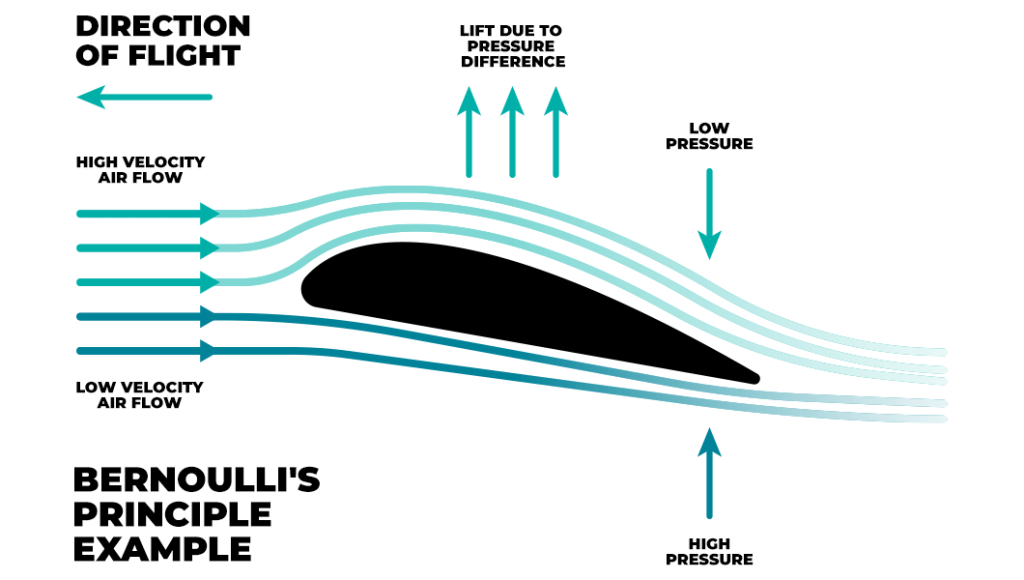
Lift is one of the most important aspects of aerodynamics. It’s what gets airplanes in the air and it’s what keeps them there. So how does lift work, and how is it generated? Examine the shape of the airplane wing below:

Air that flows over the top curved plane will move faster and, according to Bernoulli’s Principle, produce less pressure. The slower-moving air flowing under the wing, however, will create higher pressure. This difference in pressure generates lift, which pushes the wing upward.
THE FOUR FORCES OF FLIGHT >
The four forces of flight (lift, drag, weight, and thrust) are basic but essential components to understand how an airplane is able to fly.
 Flight Online